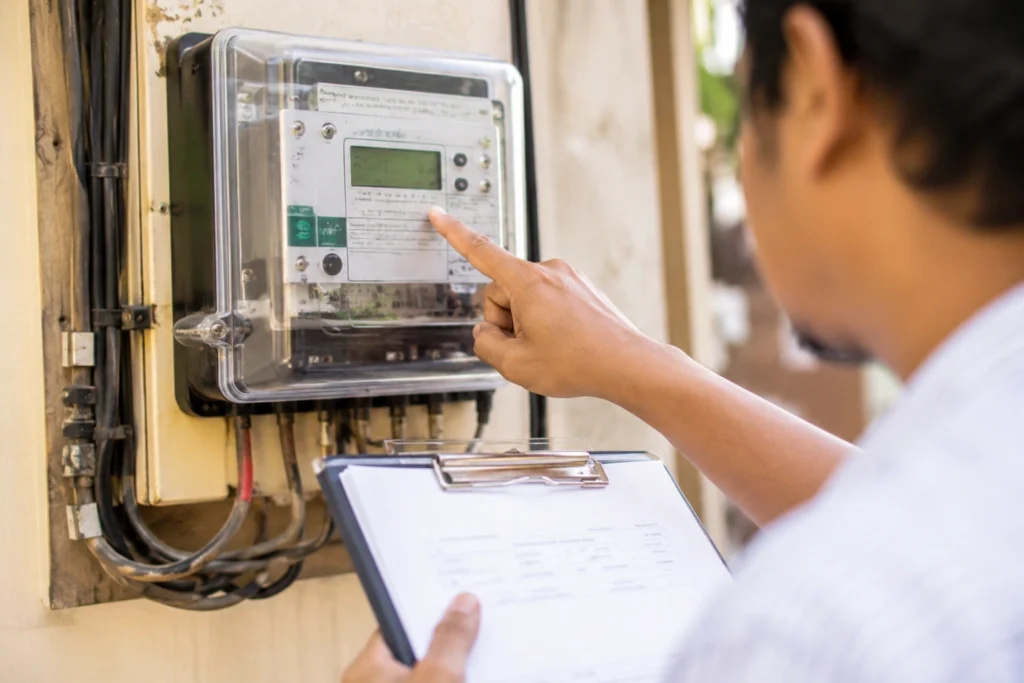
The Need for Accurate Sub-Metering
In densely populated commercial zones like Andheri and Kurla, a single property often hosts multiple tenants, workshops, or small retail outlets. Relying on a single main utility meter and attempting to divide the electricity bill manually leads to endless disputes. Installing private sub-meters (also known as check meters) is the only transparent, equitable solution to track individual consumption accurately.
Legal vs. Private Sub-Meters
It is crucial to understand the difference between a utility-sanctioned meter and a private sub-meter.
- Utility Meters: These are installed and sealed by Tata Power, Adani, or BEST. The tenant gets a bill directly from the utility company in their name. This requires formal property division documents.
- Private Sub-Meters: These are purchased from the open market and installed downstream from the landlord’s main utility meter. The landlord pays the main bill and collects the proportional amount from the tenants based on the sub-meter readings.
Technical Installation Guidelines
Installing a sub-meter is not a DIY project. It involves tapping into the main distribution line, which carries lethal voltage.
- Isolating the Circuit: The electrician must identify the specific live and neutral wires feeding the tenant’s space and isolate them entirely from the rest of the building.
- Mounting the Meter: The sub-meter must be mounted securely on a fire-retardant wooden or hylam board, preferably near the main distribution panel for easy reading.
- Load Balancing: If it’s a three-phase system, the sub-meters must be distributed evenly across the red, yellow, and blue phases to prevent overloading the main neutral wire.
- Sealing: Once tested, the sub-meter terminal cover should be sealed with a specialized lead or plastic seal to prevent tampering or bypassing by the tenant.
Frequently Asked Questions
Is it legal to install private sub-meters?
Yes, it is perfectly legal to use private sub-meters for internal accounting purposes, provided you do not charge the tenant a higher per-unit rate than what the utility company charges you.
What happens if a tenant tampers with the sub-meter?
This is why proper sealing and regular inspections are necessary. If tampering occurs, the main utility meter will still register the actual total consumption, and the landlord will be forced to cover the discrepancy.
Can a sub-meter handle air conditioners?
Yes, provided you purchase a high-capacity sub-meter (e.g., 10-60 Amps) and wire it using thick gauge copper cabling (4 sq mm or higher).
Do I need utility permission for a private sub-meter?
No. Since the sub-meter is installed inside your premises on your side of the main meter, it falls under your internal wiring, and utility permission is not required.
Are digital sub-meters better than analog ones?
Absolutely. Digital static meters are far more accurate, immune to magnetic tampering, and offer LCD displays that are easy to read and photograph for billing.