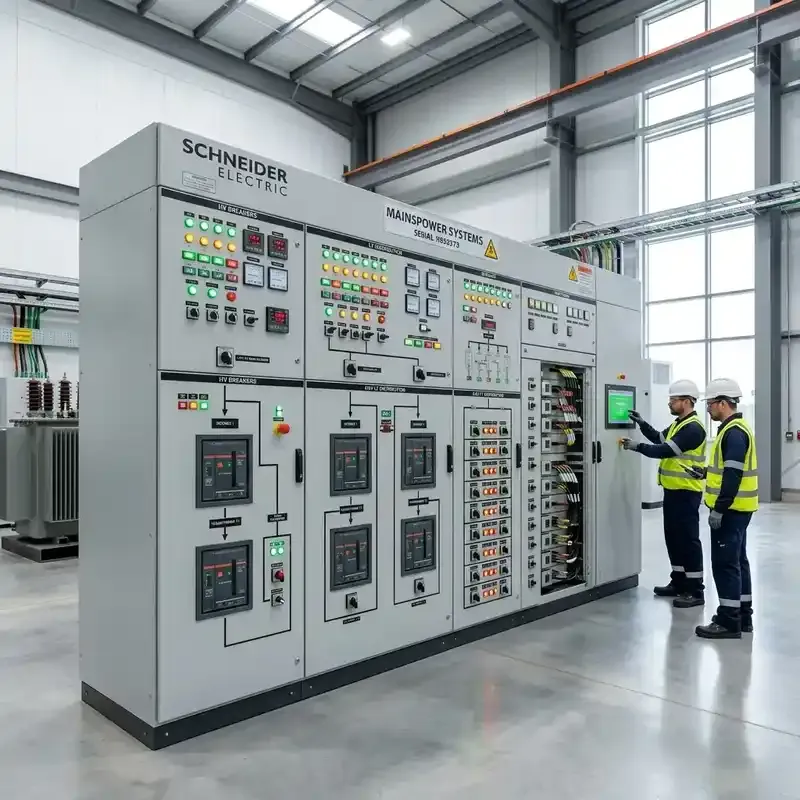
Scaling Up Production Safely
As manufacturing units expand their production lines and install heavier CNC machines or larger injection molding equipment, their power requirements inevitably outgrow their originally sanctioned load. Operating beyond this sanctioned limit under MSEDCL (Mahavitaran) invites crippling ‘Maximum Demand’ penalties. Upgrading an industrial load (Load Enhancement) is a highly scrutinized process, often requiring major infrastructure upgrades on both the consumer’s and the utility’s side.
The 2026 Regulatory Framework
MSEDCL has digitized the bulk of the application process via the Mahadiscom portal, but the physical inspections remain stringent.
- System Augmentation: If you are requesting an enhancement that pushes your total load beyond the capacity of the local MIDC distribution transformer, MSEDCL will require ‘Infrastructure Augmentation’. You may have to bear the cost (partially or fully) of upgrading the transformer or laying a dedicated new feeder cable to your factory.
- LT to HT Transition: If your new total load crosses 100 kW, you can no longer remain on a Low Tension (LT-V) tariff. MSEDCL will mandate a transition to a High Tension (HT-I) connection. This requires you to build a private transformer yard within your factory premises.
- CEIG Clearances: Any load enhancement that involves HT lines or major substation upgrades requires a fresh safety certificate from the Chief Electrical Inspector to Government (CEIG).
Step-by-Step Application Workflow
- Submission of Form A-1: Log into the MSEDCL portal and submit a Load Enhancement request, attaching the latest factory licenses and property proofs.
- Technical Feasibility Study: MSEDCL engineers calculate if the local grid can support your requested load without causing voltage drops for neighboring factories.
- Submission of Test Report: Your Government Licensed Electrical Contractor must submit a comprehensive Test Report detailing the upgraded internal wiring, new busbars, and APFC panels.
- Payment of SLC and SD: Upon approval, you must pay the firm quotation which includes the differential Security Deposit (calculated at industrial rates) and any Service Line Charges (SLC) for new cables or transformers.
Frequently Asked Questions
How long does an industrial load enhancement take?
If no transformer upgrade is needed, it takes about 15-30 days. If a dedicated feeder or HT transition is required, it can take 3 to 6 months.
What is an APFC panel and why is it mandatory?
Automatic Power Factor Correction (APFC) panels ensure your factory’s machinery doesn’t cause grid inefficiency. MSEDCL mandates them for industrial loads to prevent power factor penalties.
Do I have to stop production during the upgrade?
Not entirely, but you will experience a scheduled power outage on the final day of connection when the main switchgear and cables are swapped over.
Will my per-unit tariff increase?
Your fixed monthly demand charges will increase based on the new sanctioned load. Your per-unit energy charge remains the same unless you cross from LT to HT tariff structures.
Can I apply for load reduction later if production drops?
Yes, you can formally apply for load reduction to lower your fixed monthly demand charges, but MSEDCL usually restricts how often you can fluctuate your load.